My Shopping Bag


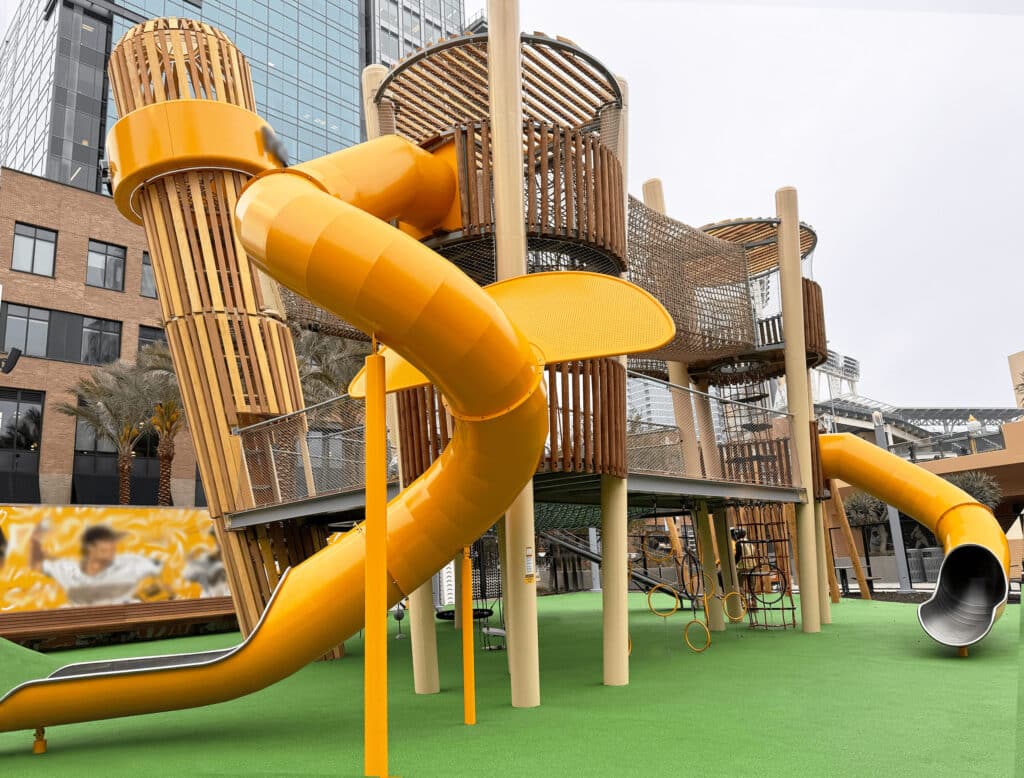
Choosing playground slide materials is the decision that quietly determines cost, appearance, lifespan, and maintenance for the next two decades. Most buyers specify on appearance, then regret it on maintenance. Here is what actually separates stainless steel, rotomolded polyethylene, and powder-coated finishes, and where each one belongs. In practice, those three options cover most custom slides we quote.
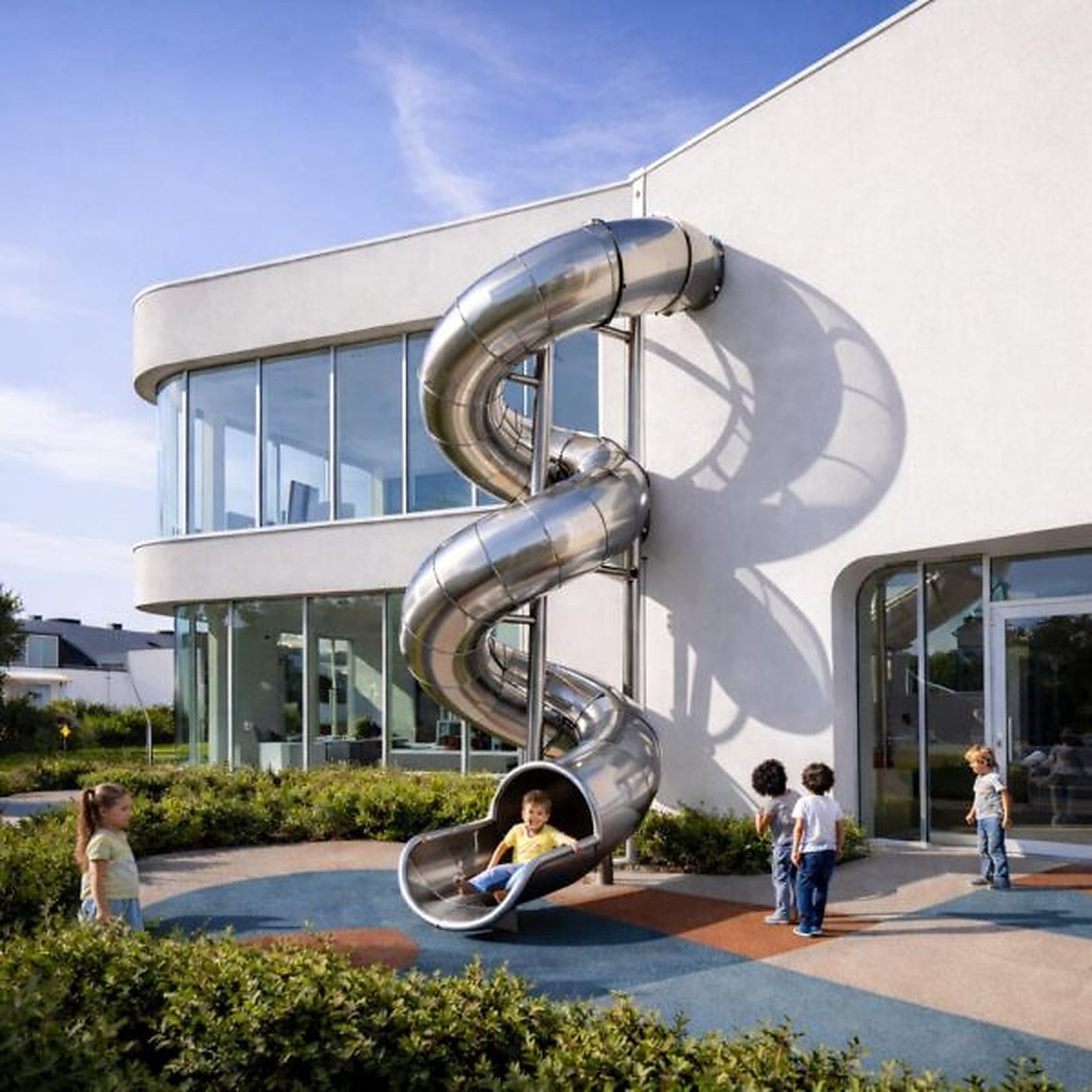
First, stainless is the architectural choice. It takes sculptural forms plastic cannot hold — serpentine curves, dramatic drops, long embankment runs — and its surface is non-porous, vandal-resistant, and easy to sanitize. It carries our 25-year warranty, and we offer cool-to-the-touch options for sunny climates.
Where it belongs: signature installations, indoor commercial spaces, projects where the slide is meant to be the thing people photograph, and anywhere the replacement cycle needs to be measured in decades rather than years.
Second, we source rotomolded plastic made from UV-stable polyethylene and mount it on engineered steel supports. Moreover, it holds vibrant color, shrugs off heavy daily use, and comes in spiral, straight, tunnel, and embankment configurations. It carries a 10-year warranty and it does not stretch the budget the way custom stainless does.
Where it belongs: color-led designs, themed environments, high-traffic municipal parks where budget covers more play value per dollar, and projects where a specific palette drives the decision. You will find configurations and sizes with our slide products.
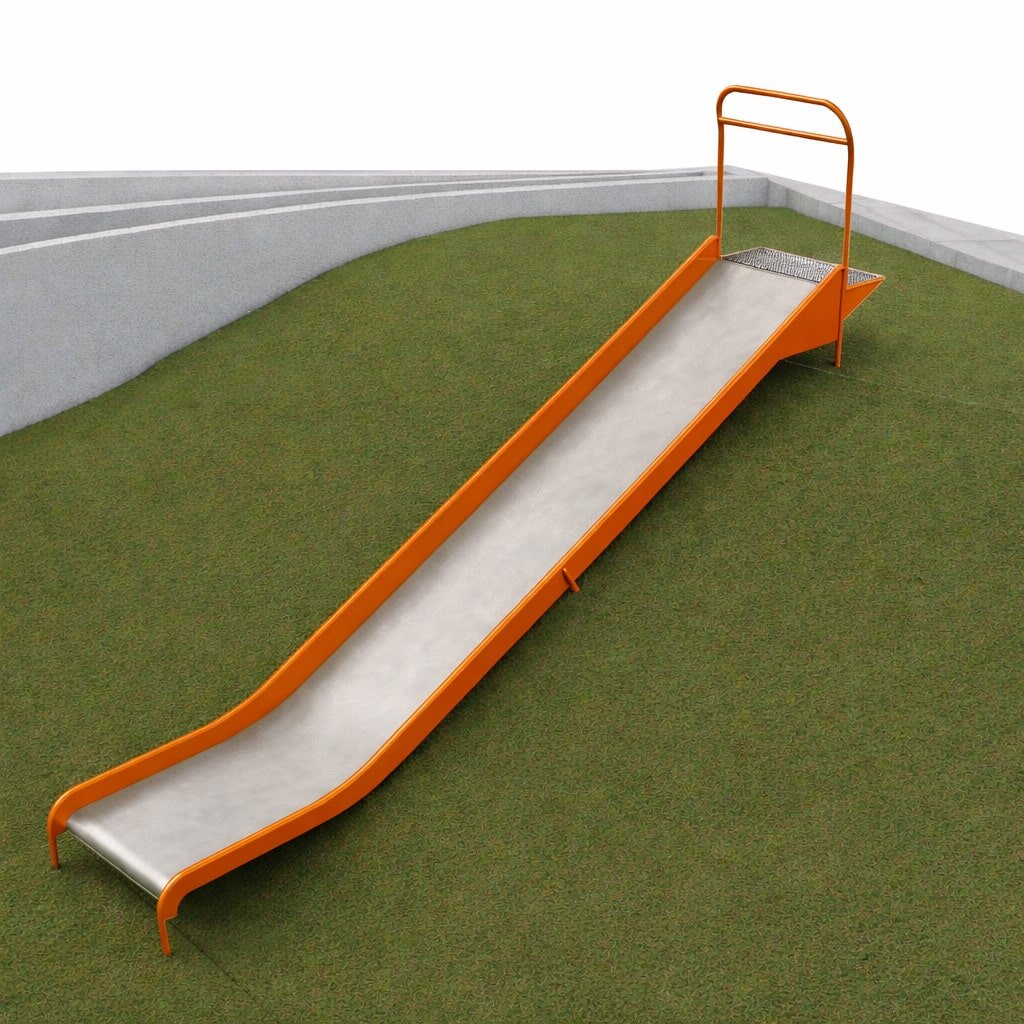
Third, powder coating is not a structural material — it is a finish that goes over steel, and it opens the color range that raw stainless does not offer. It lets a slide match a brand palette or a site scheme while keeping steel underneath. However, the trade-off is refresh: a coated surface has a maintenance cycle that bare stainless does not.
Material choice also determines what can be built into the slide. Port holes, perforated graphics, LED lighting, and even speakers are all achievable — the enclosure type and material decide which. For example, a stainless tunnel slide with port holes and internal lighting is a different ride than the same geometry in plain plastic, and you specify that difference at design, not later.
Generally, three questions settle most projects. First, is the slide a design centerpiece or a play component? Naturally, a centerpiece points to stainless. Second, does a specific color drive the concept? Similarly, a color-led concept points to rotomolded or powder coat. Third, what is the replacement horizon — is this a 10-year asset or a 25-year one? Ultimately, the warranty terms are the honest answer to that.
Budget follows from those answers rather than leading them, and the ranges for each are in our pricing guide.
| Commercial plastic (rotomolded polyethylene) | Stainless steel | |
|---|---|---|
| Landrec warranty | 10 years | 25 years |
| Slide types | Open embankment, spiral tunnel, curved, custom tunnel, custom open | Open and tunnel embankment, spiral tunnel, curved, custom tunnel, custom open |
For a deeper comparison, read our stainless steel vs. plastic slide buyer’s guide, or see the Open Embankment Slide and Spiral Tunnel Slide, both available in either material.
It depends on the role. Stainless steel suits sculptural, high-traffic, and long-life installations and carries a 25-year warranty. Rotomolded polyethylene suits color-led and budget-conscious projects with a 10-year warranty.
Landrec warrants stainless steel for 25 years and rotomolded polyethylene for 10 years. Indoors, stainless is effectively permanent.
Yes. Port holes, perforated graphics, LED lighting, and speakers are all available depending on the slide type and material.
Cool-to-the-touch stainless options are available, and orientation, shade placement, and finish selection are all addressed during design.
Still not sure which material fits your project? Send us the space and the concept through our contact page and we will recommend a direction with the trade-offs spelled out. (888) 857-2001.