Who Designs Playgrounds? How Custom Playground Design Works
Most public playgrounds are designed by a team, not one person. A landscape architect plans the site, a playground designer creates and engineers the play equipment, and the owner, whether a city, a school or a museum, sets the goals and the budget. Here is who does what, how a custom playground moves from the first conversation to opening day, and the safety standards every design has to meet.
Who Designs Playgrounds?
Four groups usually share the work:
The owner. A parks department, school district, museum, sports team or developer decides what the playground needs to do, who it serves and what it can cost. Landrec’s clients have included the City of Yorba Linda, the San Diego Padres, the City of Compton, Los Angeles County Parks and Recreation and KidSTREAM Children’s Museum.
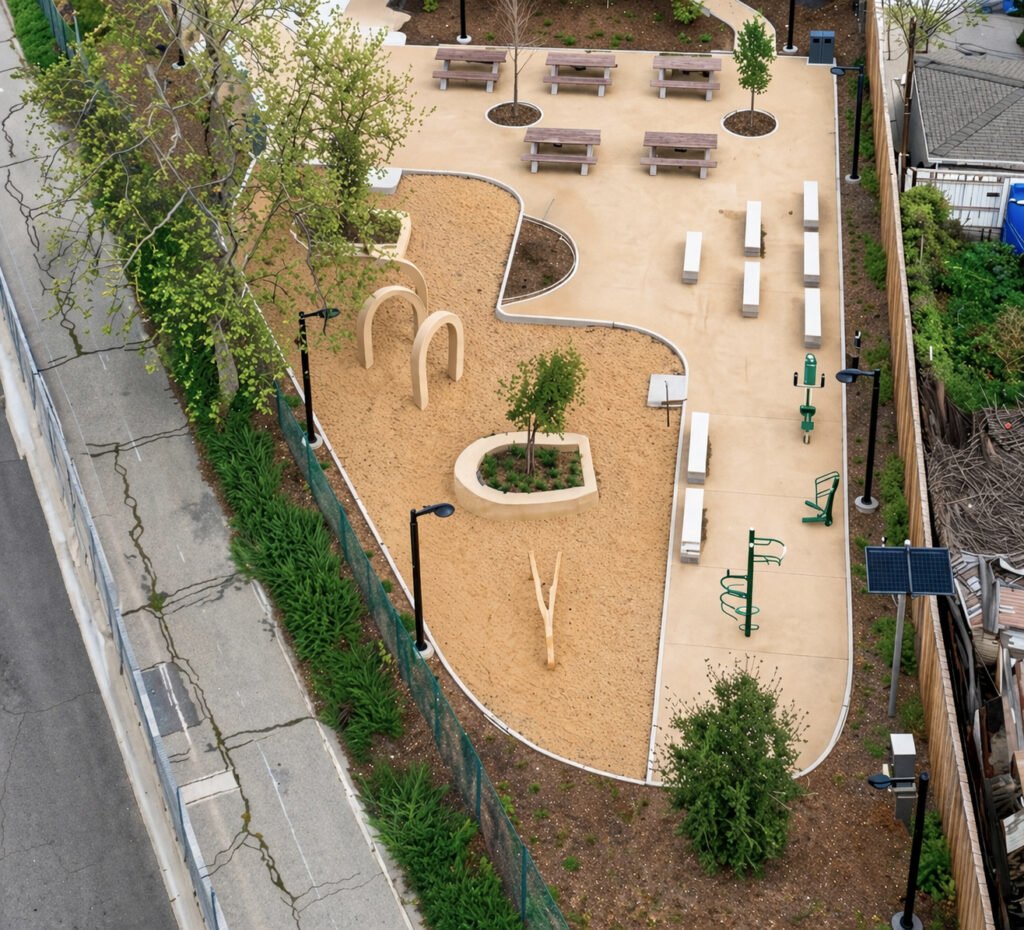
The landscape architect. Landscape architects plan the whole site: grading, paths, planting, drainage and how the play area fits the park around it. The U.S. Bureau of Labor Statistics lists public parks and playgrounds among the spaces they design, and all states require landscape architects to be licensed (BLS).
The playground designer. A play equipment designer turns the theme and the site plan into structures children can climb, slide and swing on, and engineers them to playground safety standards. This is the role of the Landrec Design Studio.
The safety inspector. A Certified Playground Safety Inspector (CPSI) can check the finished playground. The National Recreation and Park Association trains CPSIs to identify hazards, rank them by injury potential and set up inspection and maintenance routines (NRPA).
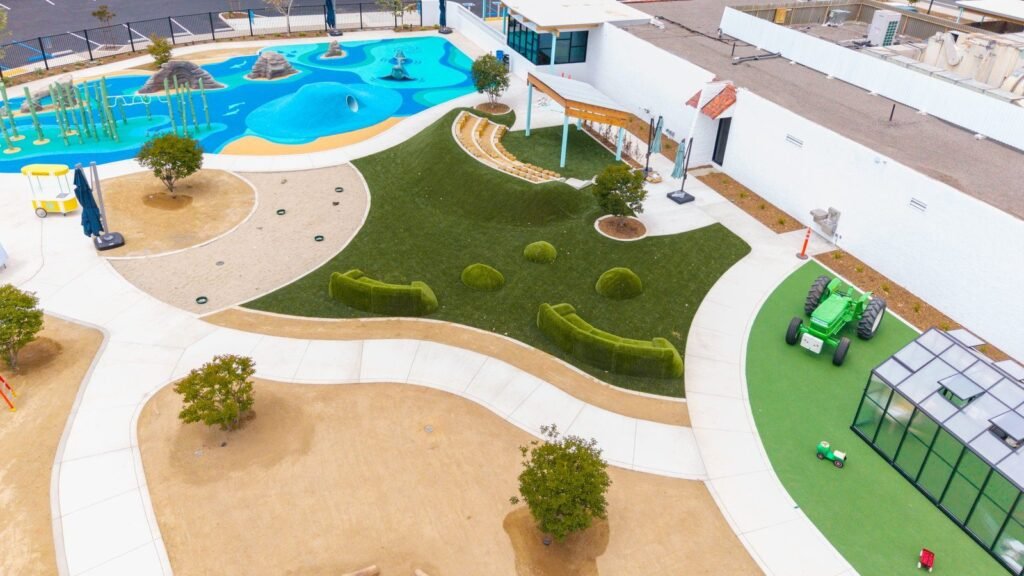
On custom projects, the landscape architect and the playground designer work side by side. At KidSTREAM Children’s Museum in Camarillo, for example, Landrec collaborated with the museum and a landscape architecture firm to turn a 20,000-square-foot grass lot into an outdoor play exhibit with a stone-lined streambed for natural water play.
How Custom Playground Design Works, Step by Step
Every studio has its own process. At Landrec, a custom playground moves through five stages:
Discovery. We start with your story: the site, the people who will use it, the theme and the budget. This is where the idea for a play sculpture, a themed tower or a signature slide takes shape.
Development. We turn the idea into a concept, then into detailed drawings and 3D models you can share with your community and stakeholders.
Engineering. Our engineers work from the drawings to make sure the design meets ASTM, CPSIA, CPSC and ADA requirements, along with our own safety standards.
Build. Each element is built to the approved plans. Landrec fabricates Wildwood™ timber play and custom metal elements, and designs, fabricates and supplies custom slides.
Installation and support. We stay involved through installation and after opening, with maintenance plans and warranty support.
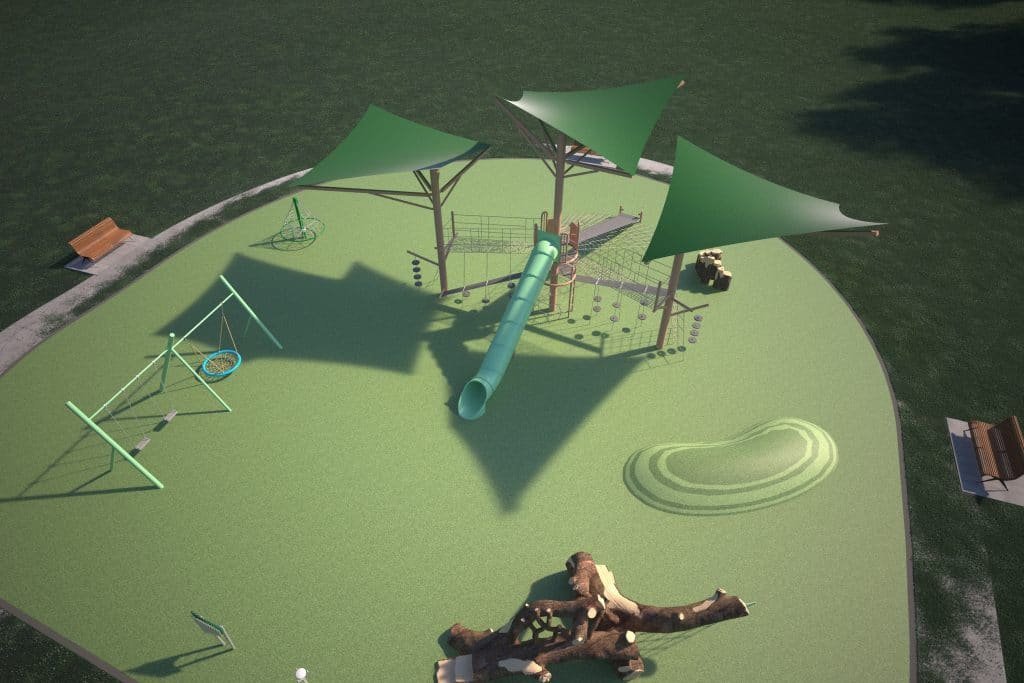
At Peter Schabarum Park in Hacienda Heights, Los Angeles County asked for an inclusive, nature-themed play area for 5- to 12-year-olds inside a grove. Landrec’s design, called “Triple Tree Jam,” uses three large columns that hold rope obstacles, with fabric hyper sails for shade.
The Safety Standards Behind Every Design
ASTM F1487. The ASTM standard for public playground equipment sets safety and performance requirements for equipment used by children from 2 through 12 years old. The current edition is F1487-25 (ASTM).
CPSC Public Playground Safety Handbook. The U.S. Consumer Product Safety Commission publishes the Public Playground Safety Handbook for public playgrounds (CPSC).
ADA accessibility. Under the ADA standards for play areas, at least 50 percent of elevated play components must be on an accessible route, and at least one of each type of ground-level play component must be on an accessible route too (U.S. Access Board).
A good playground designer will tell you up front which standards a design follows and how accessibility is handled.
Questions to Ask a Playground Designer
Which safety standards will the design meet, and who reviews the engineering?
How will the design meet ADA requirements for play areas?
Can you work from our landscape architect’s site plan?
Will we see drawings and 3D models before anything is built?
Who handles installation, and what maintenance and warranty support comes after?
Who designs playgrounds? Usually a team. A licensed landscape architect plans the site, and a playground designer designs and engineers the play equipment, working to the owner’s goals and budget.
What is the difference between a landscape architect and a playground designer? A landscape architect plans the whole outdoor space, including grading, paths, planting and drainage. A playground designer focuses on the play structures and the safety standards they must meet.
What standards apply to public playgrounds? Key references include ASTM F1487 for public playground equipment, the CPSC Public Playground Safety Handbook and the ADA standards for play areas.
Does Landrec work with landscape architects? Yes. Landrec works alongside owners and landscape architects on custom projects, from city parks to museums and ballparks.