My Shopping Bag


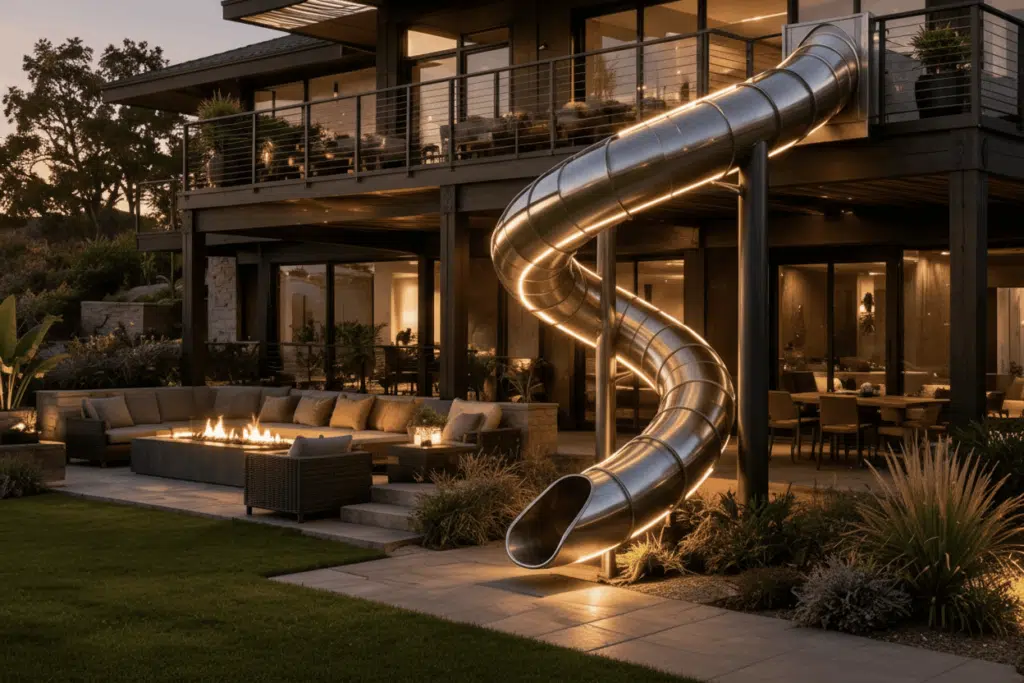
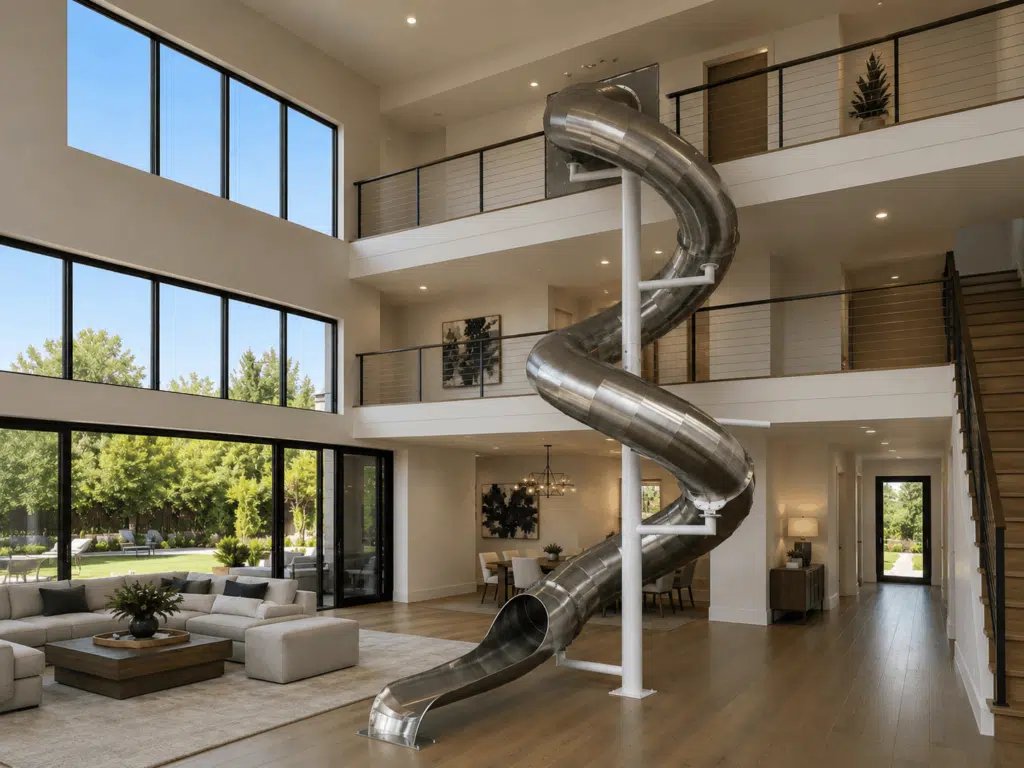
A spiral tunnel slide solves a problem most slides cannot: it delivers real height inside a small plan area. That makes it the usual answer for atriums, pocket parks, and rooftop decks. However, the specification is less forgiving than an open chute. Diameter, deck height, run length, use zone, and enclosure all interact, so changing one changes the others. Here is the order to settle them in, and why that order matters more here than on other custom slides.
A straight slide trades horizontal run for every foot of drop. A spiral does not. It wraps the descent around a vertical axis, so a tall ride fits a footprint barely wider than the tube itself. Consequently, the spiral is what gets specified when the site plan has no room to spare. For the broader case, see our notes on space-saving playground equipment.
Still, compact is not the same as free. The exit and its run-out sit outside the tube, and they need their own space.
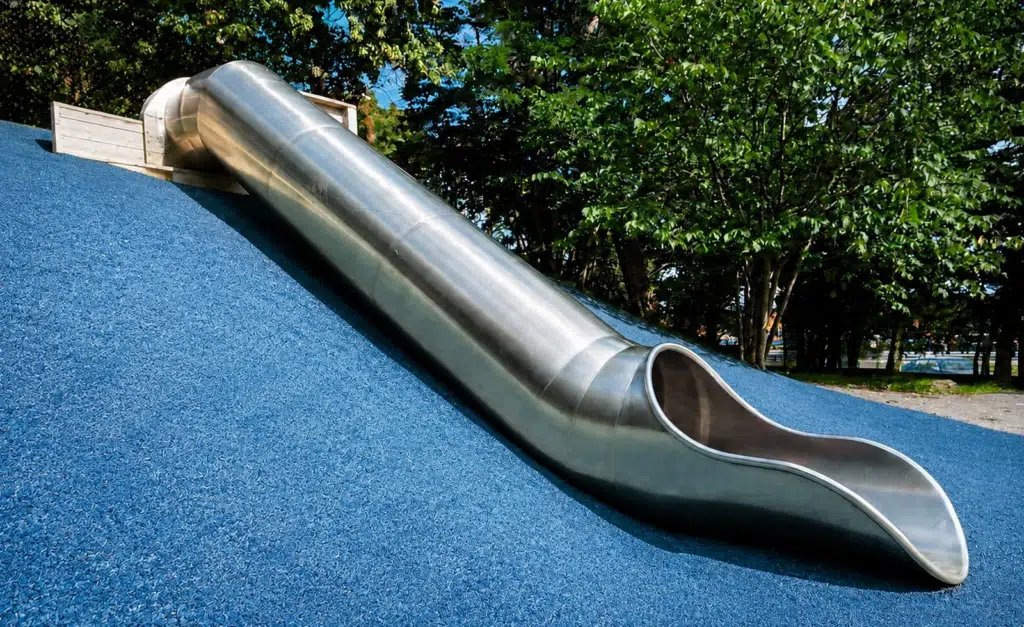
Diameter decides who can ride. A 30-inch internal diameter accommodates adults as well as children, which matters in corporate lobbies, museums, and family destinations where parents ride too. Narrower tubes read as children-only. Therefore, fix diameter before anything else, because it drives the structure, the supports, and the cost.
Deck height sets the ride, and run length follows from it along with the number of turns. As a reference point, a 15-foot deck on a 360-degree spiral produces roughly a 35-foot run. Moreover, a good manufacturer will adjust deck height to suit your architecture rather than the reverse. Ask what the standard height is, what the maximum is, and what changes structurally between them.
This is where compact plans get caught out. The tube footprint is small, but the exit needs a clear, compliant run-out in front of it. In addition, the climb sequence and approach need space of their own. Measure the use zone rather than the tube when you test whether a spiral tunnel slide fits.
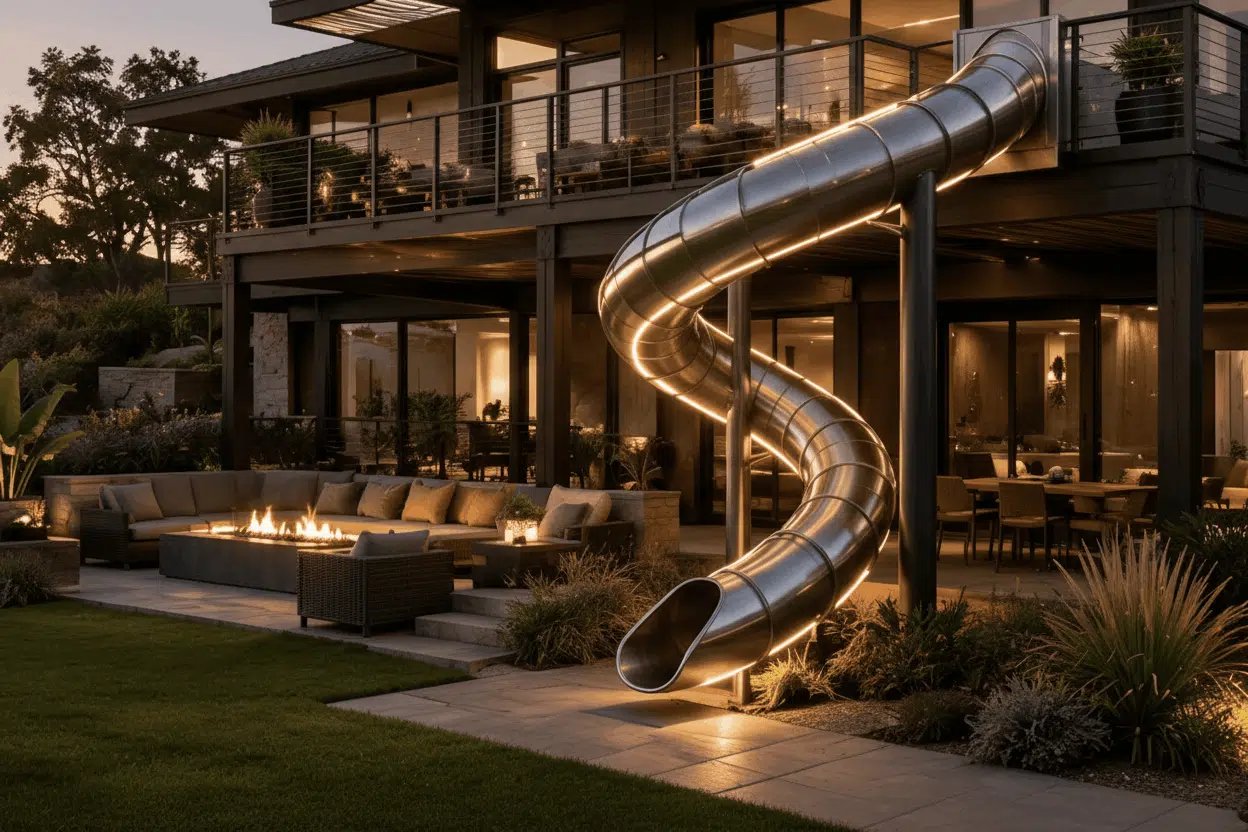
An enclosed tube is darker and louder than an open chute, and that changes the ride. Options exist to tune it. Perforated roof ports bring daylight down the descent. Poly color windows turn the ride into a sensory sequence instead of a dark tube. Internal LED lighting does the same after dark, and it makes the slide read as an architectural feature at night.
Material choice decides which of these you can have, so read our guide to playground slide materials alongside this one.
Ask how the slide lands on the site. Surface-mounted plates let it sit on an existing deck or slab. Direct bury suits new construction and landscape integration. Similarly, the deck it exits from has to carry the load, whether that structure is yours or ours. Settle this early, because retrofitting a mounting method is expensive.
Enclosed slides answer to the same rules as open ones. ASTM F1487 and the CPSC Public Playground Safety Handbook govern public play equipment, with CPSIA covering materials and ADA covering accessibility. Additionally, an enclosed tube raises questions an open chute does not: sightlines into the tube, supervision at entry and exit, and climbing on the outside of the structure. An anti-climb fan guard at the entry addresses the last of those. Ask for the documentation rather than the assurance.
The Vertex Spiral Slide is a worked version of everything above. It is a 360-degree spiral tunnel slide in 304 stainless steel, with a 30-inch diameter that takes adults, a 15-foot standard deck height that also accommodates 16-foot decks, and roughly a 35-foot run.
Furthermore, it carries the enclosure options from the section above — perforated roof ports, poly color windows, and internal LED — plus an anti-climb fan guard and a choice of surface mount or direct bury. Because its use zone stays compact, it suits pocket parks and constrained indoor atriums that cannot take a conventional tower.
Thirty inches accommodates adults as well as children, which matters anywhere parents ride alongside them. Narrower tubes limit the slide to children.
Run length follows deck height and the number of turns. A 15-foot deck on a 360-degree spiral produces roughly a 35-foot run.
Yes. Perforated roof ports admit daylight, poly color windows add a sensory sequence, and internal LED systems light the descent after dark.
It needs a smaller plan area for the same drop, because the descent wraps around a vertical axis. The exit use zone still has to be planned separately.
Send us the deck height, the site constraints, or the drawing set through our contact page and we will come back with a concept direction, a budget band, and a schedule. Our pricing and timelines guide covers what drives each phase. Or call (888) 857-2001.